
Matcha Education · FUJI ASAHIEN
What Does "Umami" Mean in Matcha?
Quick Answer
Umami in matcha is the savory, brothy richness produced by L-theanine and other amino acids that accumulate in shade-grown tea leaves. It is the fifth basic taste — alongside sweet, sour, salty, and bitter — and it is the defining characteristic of high-quality matcha.
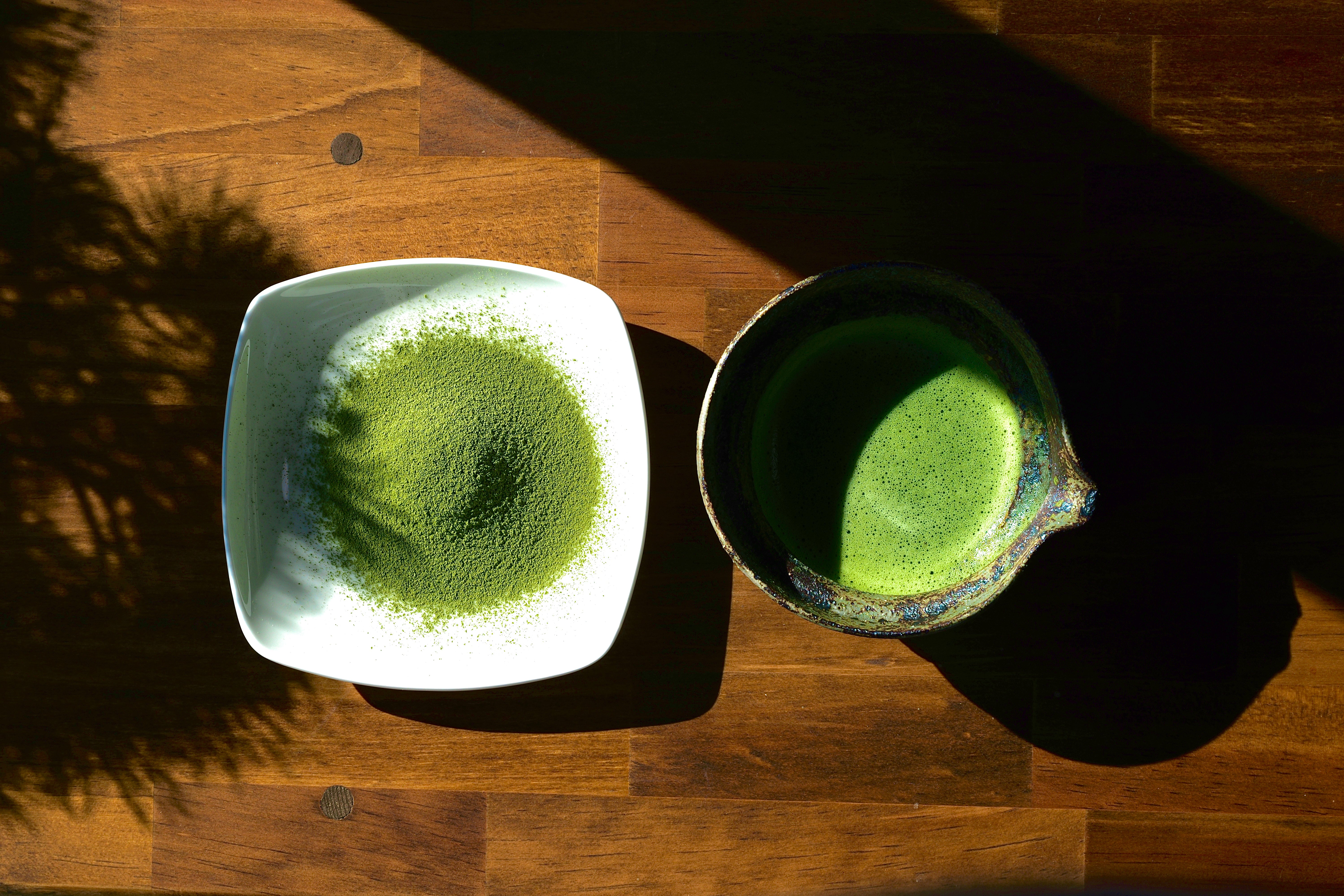
A freshly whisked bowl of FUJI ASAHIEN matcha — the thick, smooth foam is a visual expression of its deep umami richness.
Umami: The Fifth Taste
Most people grow up learning four basic tastes: sweet, sour, salty, and bitter. But in 1908, Japanese chemist Kikunae Ikeda identified a fifth, distinct taste while studying kombu seaweed broth. He named it umami (旨味) — a Japanese word that translates roughly as "pleasant savory taste" or "deliciousness."
Umami is triggered by glutamate and certain ribonucleotides (particularly inosinate and guanylate) binding to specific taste receptors on the tongue. The sensation is often described as savory, brothy, mouth-coating, and deeply satisfying. It does not fit neatly into any of the other four taste categories — it is its own experience entirely.
Today, umami is widely recognised by food scientists and chefs worldwide. It is present in aged cheeses, cured meats, ripe tomatoes, soy sauce, miso — and, most abundantly in the plant kingdom, in high-grade shade-grown Japanese matcha.
The Science Behind Umami in Matcha
Umami in matcha comes primarily from a family of amino acids and peptides. Unlike glutamate-driven umami in foods like parmesan or soy sauce, matcha's umami is dominated by a unique compound called L-theanine — found almost exclusively in the tea plant (Camellia sinensis) and certain mushrooms.
Primary Source
L-Theanine
An amino acid unique to tea. In shade-grown tencha (the leaf used for matcha), L-theanine can account for up to 45% of the total free amino acid content. It creates a smooth, brothy savouriness and promotes a calm, focused mental state by crossing the blood-brain barrier.
Secondary Source
Glutamate & Peptides
Free glutamic acid and a range of short-chain peptides also contribute to matcha's umami profile. They interact synergistically with L-theanine, amplifying the savory, mouth-coating sensation and extending the lingering aftertaste known as kōki.
Modifying Factor
Catechins (EGCG)
Catechins are the compounds responsible for bitterness and astringency. In shade-grown matcha, catechin production is naturally suppressed — which means L-theanine's umami is allowed to shine without being masked by bitterness. This balance defines premium grade matcha.
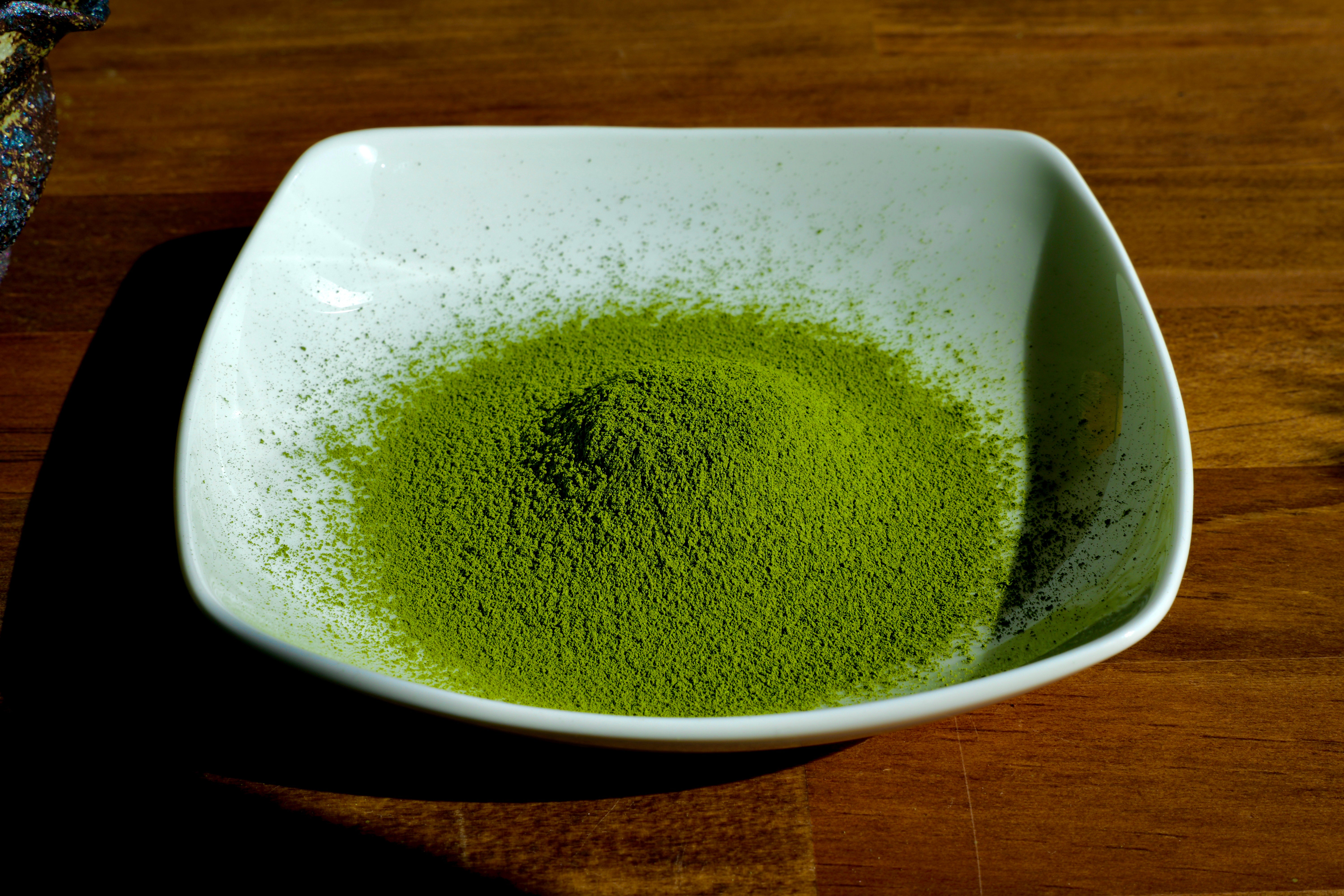
Why Color Signals Umami
The vivid emerald green color of high-grade matcha is not merely aesthetic. It reflects high chlorophyll content — which, like L-theanine, is produced in abundance under shade-growing conditions. Deep green color and high umami almost always go hand in hand. A dull, yellowish matcha typically signals lower L-theanine levels and weaker umami.
How Shade-Growing Creates Umami
The most important factor in matcha's umami is shade-growing (覆下栽培, kabuse saibai). Tea plants destined for premium matcha are covered with bamboo frames and dark fabric for 3 to 4 weeks before the first spring harvest. This single practice is the foundation of umami in matcha.
- Light is blocked (80–90% reduction): The plant is suddenly deprived of sunlight, which triggers a survival response. It accelerates chlorophyll production to capture every available photon of light.
- L-theanine accumulates: Normally, L-theanine in tea leaves is converted by sunlight into catechins (bitter compounds). With reduced light, this conversion slows dramatically — and L-theanine builds up in the leaf to much higher concentrations.
- Bitterness decreases: Because less L-theanine is being converted to catechins, the leaf becomes naturally sweeter and less bitter. The umami-to-bitterness ratio improves significantly.
- Leaves are harvested at peak umami: Only the youngest, most tender leaves from the first spring flush (一番茶, ichiban-cha) are selected. These first-flush leaves have the highest L-theanine concentration of the entire growing season.
- Tencha is produced & finely milled: After steaming (to halt oxidation), drying, and de-veining, the dried leaf — called tencha — is ground into matcha. Because the entire leaf is consumed, all accumulated L-theanine reaches your cup.

FUJI ASAHIEN's Kawane tea gardens in Shizuoka — where the cool, misty valley climate and expert shade cultivation produce matcha with exceptional umami depth.
What Does Umami Actually Feel Like to Taste?
Umami can be difficult to describe if you have never consciously identified it before. Unlike sweetness or bitterness, it is not a sharp or immediate sensation — it is more of a presence that develops as you taste.
Mouth-Coating Fullness
Umami creates a sensation of weight and richness that spreads across the entire mouth — coating the tongue, cheeks, and palate with a smooth, creamy warmth.
Savory Depth
Often compared to the savory depth of a fine dashi broth or aged cheese — a rounded, satisfying quality that no amount of sweetness alone can replicate.
Lingering Aftertaste
Umami lingers. A high-umami matcha leaves a pleasant, savory-sweet aftertaste — called kōki — that can remain on the palate for several minutes after you swallow.
A Calm Satisfaction
L-theanine also crosses the blood-brain barrier, promoting alpha brain wave activity. The umami experience in matcha is inseparable from its characteristic calm, focused energy.
"When you taste real umami in matcha for the first time, it feels less like a flavor and more like a warmth that settles through you — rich, smooth, and completely satisfying."
How to Taste Umami in Matcha
Umami in matcha is best experienced when you slow down and pay attention. Here is a simple tasting method to help you recognise and appreciate it:
- Prepare correctly: Use water at 70–75°C — not boiling. Hot water over-extracts bitter catechins, which can mask umami. Cooler water preserves and highlights the amino acids responsible for it.
- Sip slowly and let it settle: Take a small sip and hold the matcha in your mouth for a few seconds before swallowing. Notice how the liquid feels — is it light and watery, or does it feel full and coating?
- Look for the coating sensation: High-umami matcha will coat the inside of your mouth with a smooth, slightly silky sensation. This is the L-theanine and amino acids at work.
- Notice the aftertaste (kōki): After swallowing, pay attention to what remains on your palate. A pleasant, savory-sweet warmth that lingers for 30 seconds or longer is the clearest sign of genuine umami.
- Compare grades: The easiest way to understand umami is to taste a Standard grade and a Superior grade side by side. The contrast in richness, depth, and lingering aftertaste makes the difference in umami immediately obvious.
The Role of Preparation Temperature
Water temperature has a profound effect on how much umami you taste. At 70°C, L-theanine and amino acids dissolve freely, while catechin extraction is minimal — resulting in maximum umami with minimum bitterness. At 90–100°C, the balance reverses: catechins dominate, umami recedes, and the cup tastes harsh and flat.
This is why premium matcha should never be prepared with boiling water.
Umami Across FUJI ASAHIEN's Three Grades
All FUJI ASAHIEN matcha is sourced from the Kawane region of Shizuoka Prefecture — a cool, mountainous valley along the Oi River known for producing teas with exceptional mineral depth and umami character. The three grades differ primarily in the intensity and complexity of their umami.
Umami Intensity by Grade
Fuji-no-Asa offers a light, clean umami — bright and refreshing, with a pleasant vegetal savouriness that makes it an excellent everyday matcha.
Sei-Jaku deepens the experience: its umami is richer and more layered, with a creamy mouthfeel and a satisfying, extended kōki.
Den-sho, FUJI ASAHIEN's Superior grade, represents the full expression of umami — intense, refined, and long-lingering, best appreciated in a traditional bowl as usucha or koicha.
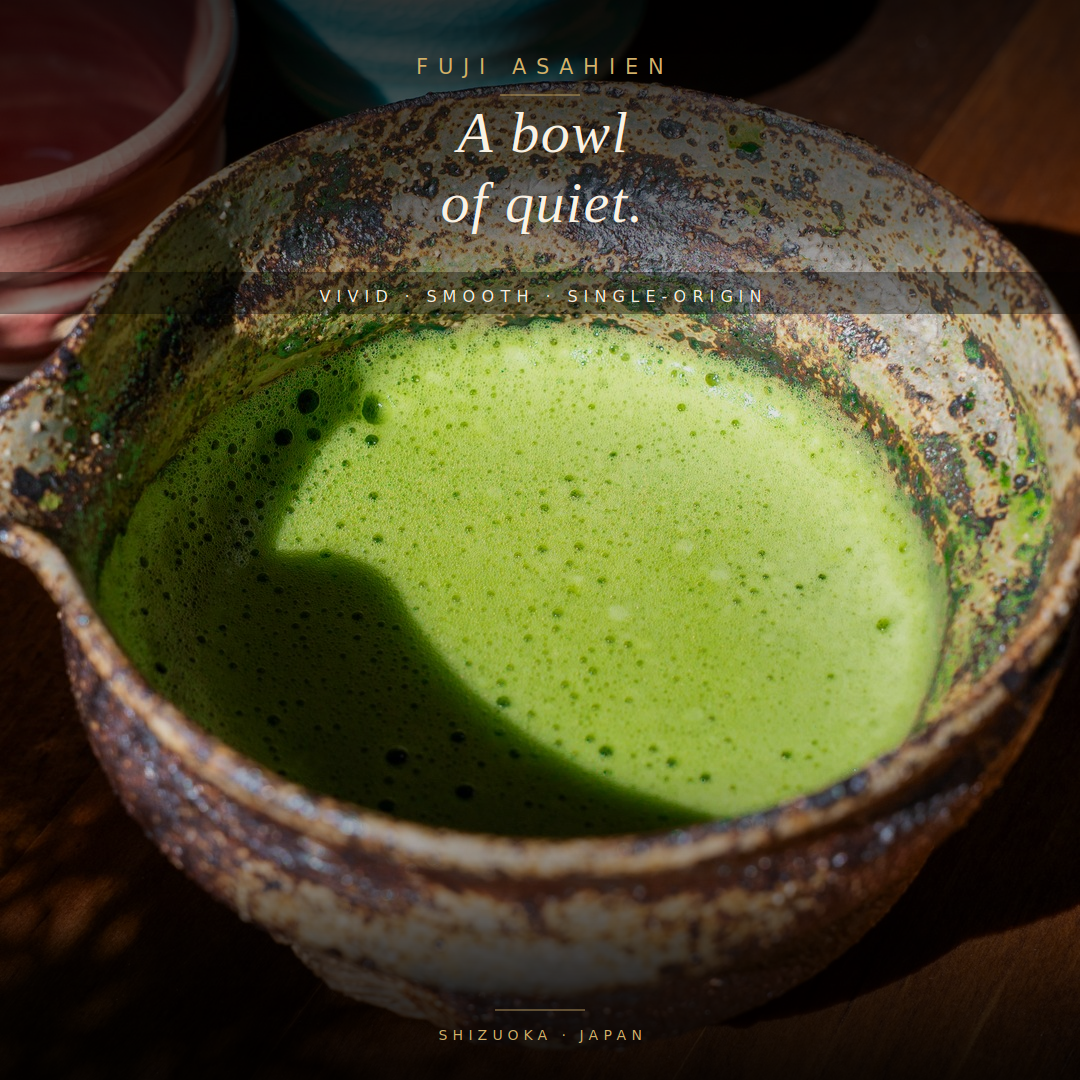
FUJI ASAHIEN's Den-sho served in a traditional ceramic bowl — the deepest expression of matcha umami from Kawane, Shizuoka.
Why FUJI ASAHIEN's Matcha Delivers Exceptional Umami
80+ Years of Umami Craftsmanship
FUJI ASAHIEN has been producing matcha in the Kawane region of Shizuoka for over 80 years. Our tea masters select only first-flush leaves — the season's first and most L-theanine-rich harvest — from carefully shade-grown gardens in the Oi River valley.
Each batch is milled to 5 microns using our advanced bead-mill technology — a particle size fine enough to release the full concentration of amino acids from every part of the leaf, creating a smoother, more umami-forward cup than stone-milled alternatives.
Kawane Terroir
The cool, misty Oi River valley creates ideal conditions for slow leaf growth — extending the period of L-theanine accumulation and deepening umami character.
Expert Shade-Growing
Precise shading control ensures maximum L-theanine accumulation while protecting the delicate first-flush leaves from stress damage.
5-Micron Milling
Ultra-fine bead-mill grinding releases every amino acid bound within the leaf cell walls — delivering more umami per gram than conventionally milled matcha.
FSSC 22000 Facility
All processing occurs in a certified clean-room environment, preserving the integrity and concentration of L-theanine and amino acids from leaf to bag.
Experience Umami
Taste Kawane Umami for Yourself
Grown in Shizuoka's Kawane valley, shade-grown for maximum L-theanine, and milled to 5-micron precision. Choose the grade that matches the depth of umami you are looking for.
Shop All Matcha