
Matcha Guide
What is the difference between
matcha and green tea?
Both matcha and green tea come from the same plant, Camellia sinensis, but they differ fundamentally in how they are grown, processed, and consumed. Matcha is made from shade-grown leaves ground into a fine powder that you drink whole; regular green tea is made from sun-grown leaves steeped in water and then discarded — giving matcha a far more intense flavour, deeper green colour, and significantly higher concentration of nutrients and antioxidants.
Matcha vs. Green Tea: The Core Difference
At first glance, matcha and green tea may seem like close relatives — and in botanical terms, they are. But the similarities end at the plant. From the moment the farmer decides how to grow the leaves, matcha and green tea begin to diverge in almost every meaningful way: cultivation method, processing, preparation, flavour, colour, and nutritional density.
Understanding these differences is not merely academic. It helps you choose the right tea for the right moment — and explains why matcha, despite coming from the same leaf, delivers an experience that is so fundamentally distinct.

The vibrant emerald colour of matcha is a direct result of shade cultivation — a process not used in standard green tea production.

Ultra-fine powder dissolved into liquid. You consume the entire leaf — nothing is discarded.

Leaves are steeped in hot water, then removed. Only a portion of the nutrients pass into the cup.
1. Cultivation: Shade vs. Sun
The most fundamental difference between matcha and green tea begins long before processing — it begins in the field. Regular green tea (including popular varieties such as sencha and bancha) is grown in full sunlight. Matcha, by contrast, is shade-grown.
The Shading Process
Approximately three to four weeks before harvest, matcha tea bushes are covered with black screens or traditional straw thatching (kabuse). This dramatically reduces the amount of sunlight reaching the leaves — typically by around 90%.
Deprived of direct sunlight, the plant goes into a kind of protective mode. It produces a surge of chlorophyll (which darkens and deepens the green colour of the leaves) and significantly increases its output of L-theanine, the amino acid responsible for matcha's signature umami sweetness and its calming, focused energy.

Regular green tea leaves, grown in open sunlight, produce relatively lower levels of chlorophyll and L-theanine. This is why standard green tea tends to have a lighter colour, a simpler flavour profile, and a more straightforward grassy or vegetal character compared to matcha's deep, complex sweetness.
Covered for 3–4 weeks. Chlorophyll and L-theanine levels spike dramatically, creating matcha's distinctive deep green colour and umami-rich sweetness.
Cultivated in full sunlight. Lower chlorophyll and L-theanine content produces a lighter, more straightforwardly vegetal flavour and a paler green colour.
2. Processing: From Leaf to Final Form
After cultivation, matcha and green tea undergo distinctly different processing paths.
How Matcha is Processed
-
1Harvest — First Flush Only Only the youngest, most tender leaves of the first spring harvest (ichibancha) are selected for high-grade matcha. These leaves contain the highest concentration of amino acids and the most delicate flavour compounds.
-
2Steaming Immediately after picking, the leaves are steamed for a very short time to halt enzymatic oxidation and lock in their vivid green colour and fresh flavour. This is a defining step that matcha shares with Japanese green tea styles such as sencha.
-
3Drying & Destemming — Creating Tencha The steamed leaves are air-dried (not rolled, as in sencha). Stems, veins, and any fibrous material are then carefully removed. The resulting product — pure leaf flesh — is called tencha. Tencha is the direct raw material for matcha.
-
4Precision Milling Tencha is ground into an ultra-fine powder. At FUJI ASAHIEN, we use advanced bead-mill technology rather than traditional stone mills, achieving a particle size of just 5 microns — finer than most stone-milled matcha, and completely free of stone-derived impurities.

Every step of matcha processing is designed to concentrate and preserve the leaf's full flavour and nutritional profile.
How Regular Green Tea is Processed
Standard green teas such as sencha, gyokuro, and bancha follow a different path. After harvest, the leaves are similarly steamed or pan-fired to prevent oxidation, then rolled and dried into their characteristic needle or flat shapes. Unlike tencha, the stems and veins remain part of the leaf, and the final product is a whole or broken dried leaf rather than a powder.
When you brew green tea, hot water extracts some of the soluble compounds — catechins, caffeine, a portion of the amino acids — from the leaf surface. But the leaf itself, along with a significant proportion of its fibre, chlorophyll, and insoluble nutrients, is discarded after steeping.
3. Preparation: Whole Leaf vs. Infusion
Matcha: You Consume the Entire Leaf
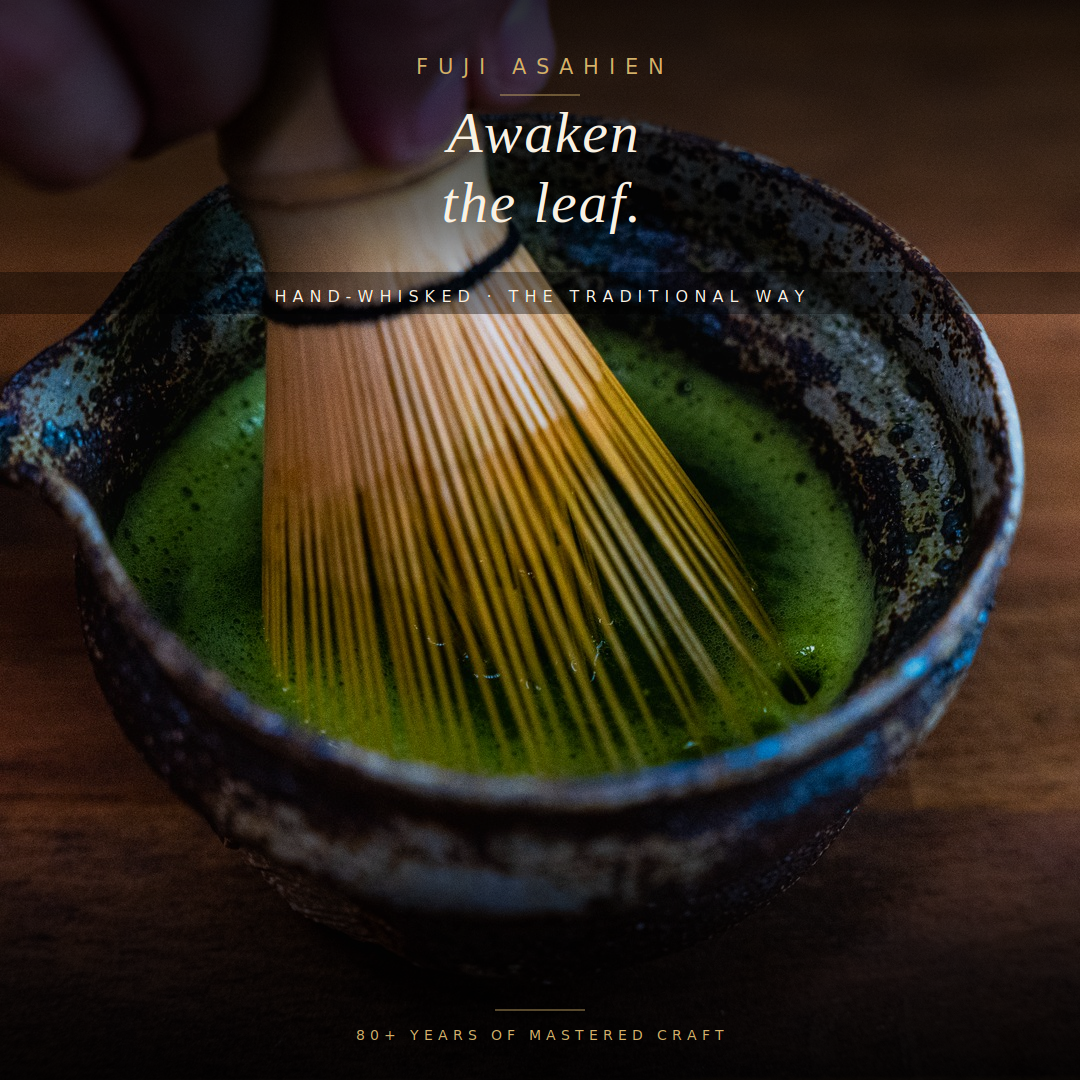
Matcha is prepared by whisking the powder directly into water (or milk) until fully dissolved and frothy. Because the powder is completely suspended in the liquid, you are consuming the whole leaf — every cell, every nutrient, every flavour compound — not just what dissolves through steeping.
This is why a single bowl of matcha is nutritionally equivalent to many cups of green tea, and why its flavour is so dramatically more intense, complex, and layered.
Green Tea: An Infusion
Regular green tea is an infusion. Dried leaves are placed in hot water, allowed to steep for a defined period (typically 1–3 minutes), and then removed or strained. Only the water-soluble fraction of the leaf's content enters the cup. The rest — including much of the fibre, most of the insoluble chlorophyll, and a portion of the antioxidants — is lost with the discarded leaves.
This makes green tea a lighter, more delicate beverage: easy to drink in volume, gentle in caffeine content, and straightforward in preparation. But it is inherently less nutritionally concentrated than matcha.

4. Side-by-Side Comparison
The following table summarises the key differences between matcha and regular green tea across all major dimensions.
| Category | Matcha | Green Tea |
|---|---|---|
| Cultivation | Shade-grown for 3–4 weeks before harvest | Grown in full sunlight |
| Leaf used | Only youngest first-flush leaves (tencha) | Various flushes; whole or broken leaves |
| Processing | Steamed → air-dried → de-veined → stone or precision milled into powder | Steamed or pan-fired → rolled → dried into leaf form |
| Final form | Ultra-fine green powder (5 micron at FUJI ASAHIEN) | Whole or broken dried leaf / tea bag |
| Preparation | Whisked directly into water or milk; powder fully consumed | Steeped in water; leaves discarded |
| Colour | Deep, vivid emerald green | Pale to medium yellow-green |
| Flavour | Rich umami, natural sweetness, layered complexity; minimal bitterness (high grade) | Light, grassy, sometimes vegetal; moderate astringency |
| Caffeine | Higher per serving (~35–70mg); sustained release via L-theanine | Lower per cup (~20–45mg); quicker peak and drop |
| L-Theanine | Significantly higher — promotes calm focus | Present, but lower concentration |
| Antioxidants | Much higher — entire leaf consumed, including insoluble compounds | Moderate — only water-soluble fraction extracted |
| Nutritional density | Very high — equivalent to multiple cups of green tea | Moderate — dependent on steep time and water temperature |
| Best uses | Drinking straight, lattes, baking, cooking, traditional ceremony | Everyday drinking, light refreshment, pairing with food |
5. Flavour, Caffeine & Nutrition
Flavour: Depth vs. Delicacy
The flavour difference between matcha and green tea is dramatic. Regular green tea typically offers a clean, light, slightly grassy or vegetal flavour with moderate astringency — pleasant and easy to drink, but relatively one-dimensional.
Matcha, by contrast, is a multi-layered sensory experience. High-quality ceremonial matcha delivers a profound umami depth (the result of elevated L-theanine), a natural sweetness (from the shading process), and a smooth, creamy body (from the ultra-fine particle size). Bitterness, while present, is a supporting note rather than the dominant character in good matcha — the opposite of what many people expect.
Caffeine & L-Theanine: The Energy Difference
Both matcha and green tea contain caffeine and L-theanine, but in very different proportions. Matcha's shade-cultivation dramatically increases its L-theanine content. This amino acid works synergistically with caffeine to produce a state of calm, sustained alertness — often described as "alert relaxation" — that is quite different from the sharper, shorter spike-and-crash associated with coffee or even regular green tea.
A cup of regular green tea contains roughly 20–45mg of caffeine with moderate L-theanine. A serving of matcha delivers approximately 35–70mg of caffeine alongside a much higher dose of L-theanine, resulting in smoother, longer-lasting energy without jitteriness or a hard crash.
Matcha contains dramatically higher levels of EGCG and other catechins than steeped green tea, because you consume the entire leaf rather than an infusion.
Shade cultivation significantly boosts L-theanine in matcha. Combined with caffeine, it produces sustained, focused energy — a noticeably smoother experience than regular green tea or coffee.
Matcha's deep green colour is a visual indicator of its far higher chlorophyll content — a result of shade cultivation, and one of the reasons matcha is associated with detoxification and cellular health.
Because you consume the whole leaf, caffeine in matcha is released more gradually into the bloodstream, producing longer-lasting energy without the sharp rise and fall common with other caffeinated drinks.
6. Which Should You Choose?
The right answer depends entirely on what you are looking for. Matcha and green tea are not competitors — they are complementary experiences suited to different moments and moods.
You want deep, complex flavour and maximum nutritional impact. You are looking for sustained focus energy. You enjoy lattes, baking, or culinary use. You want to experience something genuinely unique.
You want a light, effortless drink for everyday hydration. You prefer a delicate, lower-caffeine option. You enjoy volume — multiple cups through the day. You are new to Japanese tea and want a gentle introduction.
Many tea lovers find that both matcha and green tea have a place in their routine: matcha in the morning for sustained focus, green tea through the afternoon for gentle refreshment. They are not an either/or choice — they are two different expressions of the same remarkable plant.
Experience the Difference for Yourself
FUJI ASAHIEN offers three distinct grades of ceremonial-quality matcha — each a unique expression of Shizuoka's finest shade-grown leaves, milled to 5-micron perfection in our FSSC 22000-certified clean-room facility.
Shop Our Matcha Collection →