
Matcha Education · FUJI ASAHIEN
What is the Difference Between Organic Matcha and Non-Organic Matcha?
Quick Answer
Organic matcha is grown without synthetic pesticides or fertilizers; non-organic matcha uses regulated agrochemicals that are rigorously controlled for safety. Neither is inherently superior — quality, flavor, and safety depend far more on terroir, craftsmanship, and production standards than on organic certification alone.

Kawane tea gardens in Shizuoka Prefecture — the origin of all FUJI ASAHIEN matcha.
What Do "Organic" and "Non-Organic" Actually Mean?
When a matcha is labelled organic, it means the tea plant was cultivated without synthetic pesticides, herbicides, or chemical fertilizers. Farmers instead rely on compost, green manure, and biological pest control methods. To carry an official organic label, the grower must obtain certification from a recognised body — in Japan, this is typically the JAS (Japanese Agricultural Standard) Organic certification.
Non-organic matcha — also called conventional matcha — is grown using regulated synthetic or natural agrochemicals. This does not mean the tea is unsafe. In Japan, all pesticide usage on tea is governed by strict maximum residue limits (MRLs) set by the Ministry of Agriculture, Forestry and Fisheries (MAFF) and the Food Safety Commission of Japan. Growers who follow these guidelines produce tea that is fully compliant with domestic and international food safety regulations.
| Aspect | Organic Matcha | Non-Organic Matcha |
|---|---|---|
| Pesticide Use | None (synthetic) | Regulated & controlled |
| Fertilizer | Natural/compost only | Synthetic or natural |
| Certification | JAS Organic / USDA etc. | No organic certificate |
| Safety | Meets all safety standards | Meets all safety standards |
| Yield & Consistency | Lower, more variable | Higher, more consistent |
| Flavor Potential | Can be excellent | Can be excellent |
| Price | Generally higher | Broader range |
Pros & Cons of Organic Matcha
Organic cultivation has genuine advantages — but it also comes with real trade-offs that are often overlooked in marketing.
- No synthetic pesticide residues
- Supports biodiversity and soil health over the long term
- Appeals to consumers with specific lifestyle preferences
- Certification provides transparency and traceability
- May reduce environmental chemical runoff
- Lower crop yields make it more expensive
- Harder to protect leaves during shade-growing phase
- Greater susceptibility to pests and disease can affect quality consistency
- Certification costs and audits are burdensome for small farms
- "Organic" label does not guarantee superior flavor or color

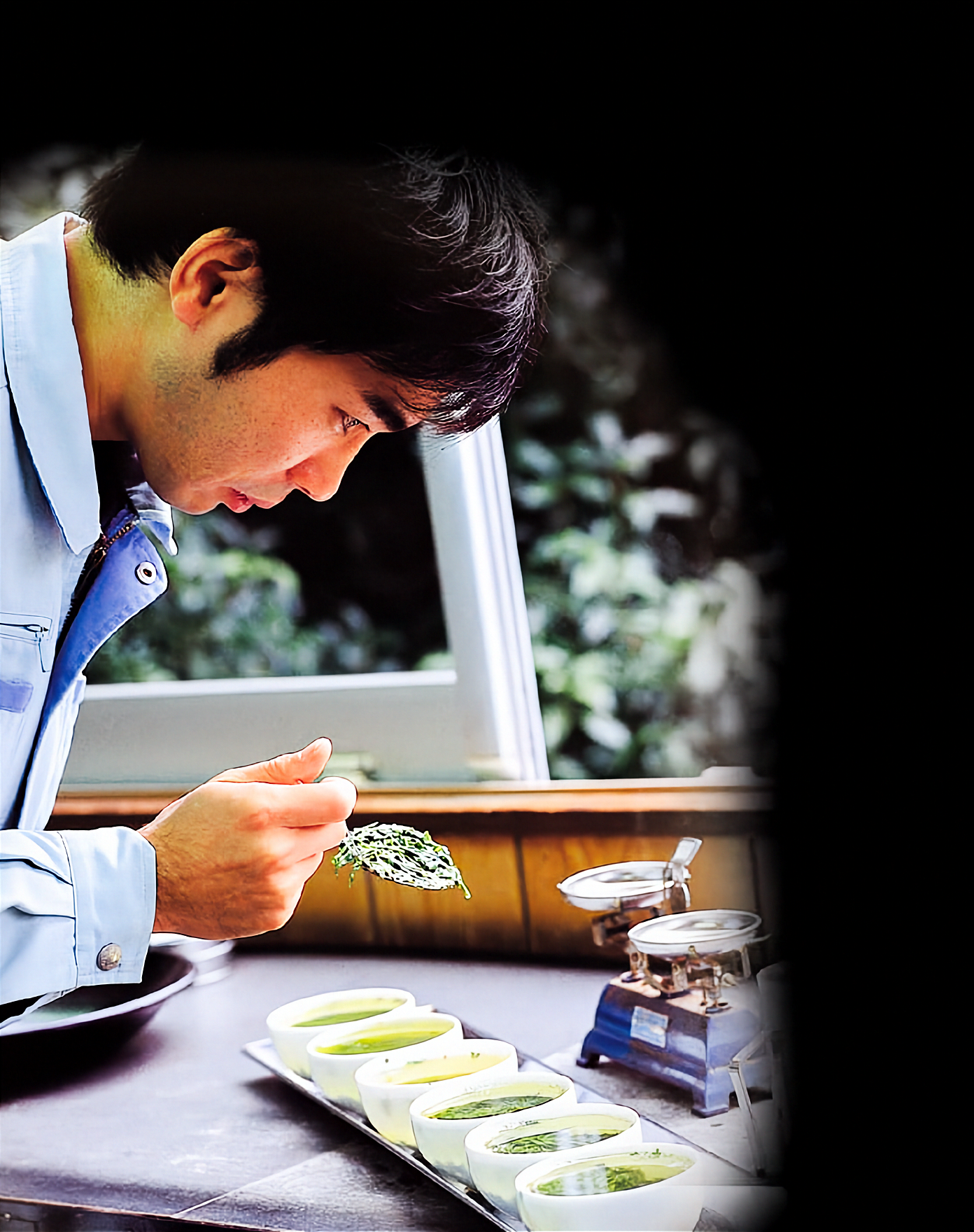
A Kawane tea farmer carefully inspects first-flush leaves — craftsmanship that determines quality regardless of farming method.
Pros & Cons of Non-Organic Matcha
Conventional matcha is far more common — including among Japan's most celebrated ceremonial-grade producers — and it is not a compromise on quality. Here is a balanced look at both sides.
- Fully safe — all pesticide residues within legal MRL limits
- Farmers can protect crops more effectively, ensuring consistent leaf quality
- Higher yields allow more affordable pricing without cutting corners
- Broader availability of premium grades
- Long track record of safe consumption worldwide
- Synthetic chemicals used (though within regulated limits)
- Does not carry an organic certification
- Some consumers prefer to avoid all agrochemical use
- Potential for environmental impact if regulations are not strictly followed
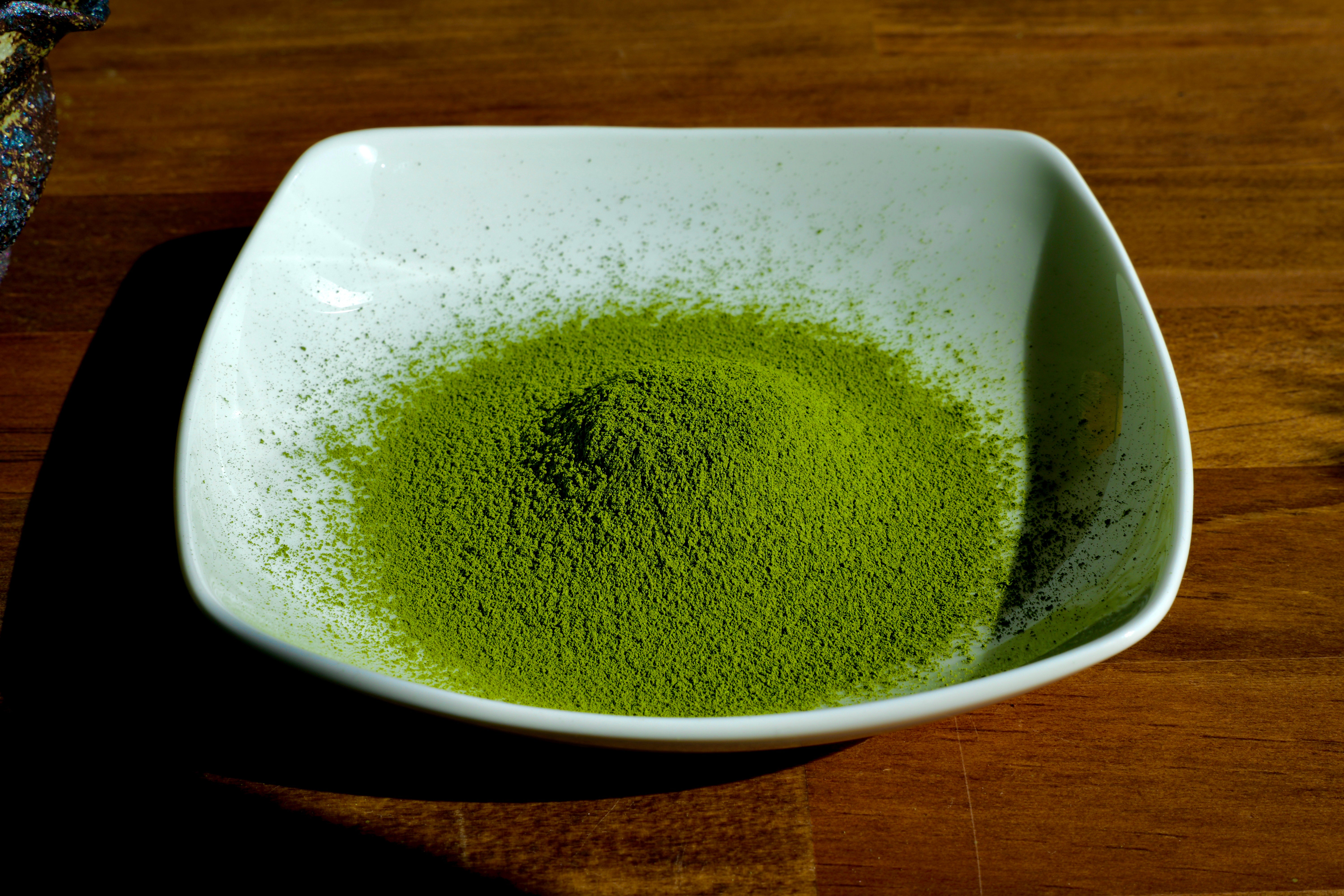
Quality Starts at the Source
The vivid emerald color and ultra-fine texture of premium matcha are the result of careful shading, first-flush harvesting, and precision milling — not whether the farm is certified organic. FUJI ASAHIEN's matcha achieves its 5-micron particle size through advanced bead-mill technology, producing a powder of exceptional smoothness and brightness.
Is Organic Always Better? What the Tea Industry Says
A common misconception is that "organic = superior." In the speciality tea world, this equation is far too simplistic. Many of Japan's most revered matcha producers — companies with decades of award-winning history — do not grow organically. The reasons are practical and rooted in agronomic reality.
Shade-growing — the critical step that gives matcha its deep green color, elevated L-theanine content, and reduced bitterness — creates a warm, humid microclimate that is particularly hospitable to fungal disease and insect pests. In high-yield gardens and during humid Japanese summers, organic pest control alone may be insufficient to protect the delicate first-flush leaves harvested for ceremonial and premium matcha.
Additionally, organic certification primarily addresses how the crop is grown, not how it is processed. Post-harvest hygiene, milling method, storage conditions, and blending expertise all play equally — if not more — important roles in the final product's quality, safety, and flavor.
Terroir First
Soil composition, altitude, water quality, and microclimate shape flavor more than farming certification.
First-Flush Matters
Only leaves from the very first spring harvest are used for ceremonial matcha — a practice independent of organic status.
Milling Precision
Ultra-fine 5-micron grinding eliminates bitterness and unlocks full umami — a processing achievement, not a growing one.
Safety Certifications
FSSC 22000, Japan Food Sanitation Authority-certified clean rooms, and strict MRL compliance ensure safety regardless of farming type.
FUJI ASAHIEN's Approach: Responsible Conventional Farming
Regulated, Safe, and Transparent
FUJI ASAHIEN's matcha is sourced exclusively from the Kawane region of Shizuoka Prefecture — one of Japan's most celebrated tea-growing areas, set in the deep river valleys of the Oi River. Our partner tea farmers use pesticides strictly within the limits prescribed by Japan's MAFF and meet all domestic and international food safety standards.
Our matcha is not certified organic, and we are transparent about this. The decision reflects our farmers' commitment to producing the highest-quality, most consistent leaves possible — a goal that sometimes requires carefully managed agrochemical use in Japan's challenging subtropical growing conditions.
"Our priority is the cup — the flavor, the color, the safety. Our Kawane farmers bring decades of knowledge to every season, working within strict regulations to deliver leaves that consistently reach the standard our customers expect."
Every batch of FUJI ASAHIEN matcha is produced in a FSSC 22000-certified facility, in a clean room certified by the Japan Food Sanitation Authority. Our advanced bead-mill technology grinds each batch to 5 microns — a precision impossible with stone milling — ensuring zero stone-fragment contamination and maximum flavor release. These production standards apply to all three of our grades: Fuji-no-Asa (Standard), Sei-Jaku (Premium), and Den-sho (Superior).

All three FUJI ASAHIEN grades — Fuji-no-Asa, Sei-Jaku, Den-sho — are produced to the same rigorous safety standards from Kawane, Shizuoka.
How to Choose: A Practical Guide
Whether organic or non-organic matcha is right for you depends on your priorities. Here is a simple framework to help you decide:
Choose Organic If…
You prefer to avoid all synthetic chemicals in your diet, and you are willing to accept higher prices and greater batch variability.
Choose Conventional If…
You prioritise flavor consistency, value for money, and are comfortable with fully regulated, legally safe farming practices.
Always Look For…
Verified origin, food safety certifications (e.g. FSSC 22000), transparent farming practices, and first-flush sourcing — regardless of organic status.
Taste Before Deciding
The truest test of matcha quality is in the bowl. Color, aroma, umami depth, and sweetness tell you more than a certification label ever can.
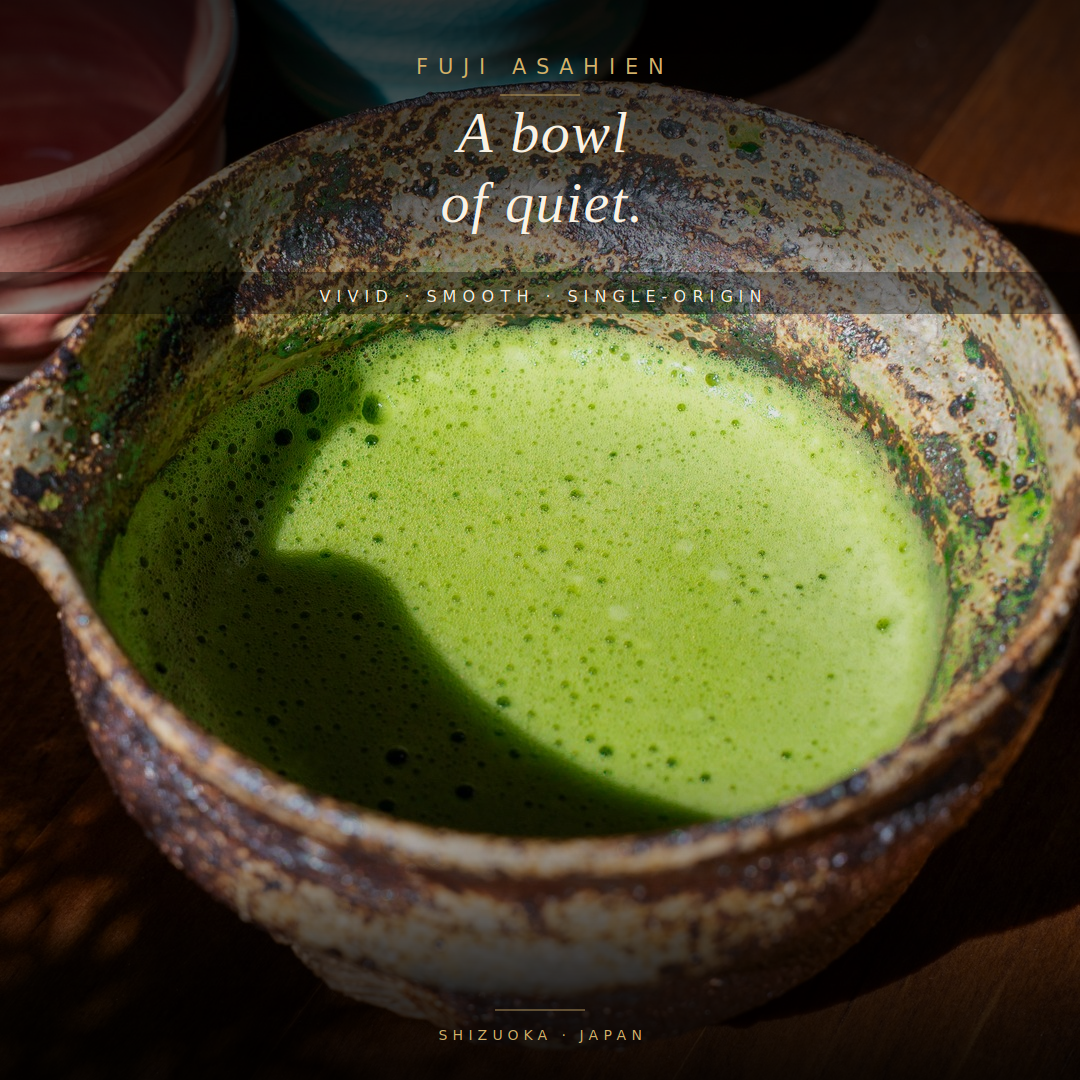
The proof is in the bowl — FUJI ASAHIEN's Kawane matcha delivers deep emerald color, rich umami, and silky texture.
Experience FUJI ASAHIEN
Discover Kawane Matcha from Shizuoka
Grown in Japan's Kawane region, produced to FSSC 22000 food safety standards, and milled to a precision 5 microns. Explore our three grades and find the matcha that suits your taste.
Shop All Matcha