
Matcha Guide
Where does matcha come from?
Matcha comes from Japan — specifically from the shade-grown tea gardens of regions such as Uji (Kyoto), Nishio (Aichi), and Shizuoka, where ideal climate, altitude, and centuries of expertise combine to produce the world's finest powdered green tea. FUJI ASAHIEN's matcha is grown in the Kawane tea region of Shizuoka Prefecture, one of Japan's most celebrated and biodiverse tea-growing territories, nurtured by the mists and mineral-rich waters of the Oi River valley in the shadow of Mount Fuji.
The Origins of Matcha
Matcha is, at its heart, a Japanese tea — but its story begins in China. The practice of grinding dried tea leaves into a fine powder and whisking them into hot water was first recorded in China during the Tang Dynasty (618–907 AD). It was Song Dynasty China (960–1279) that refined this method into a sophisticated preparation used in Buddhist monasteries, where the powdered tea helped monks maintain calm alertness during long periods of meditation.
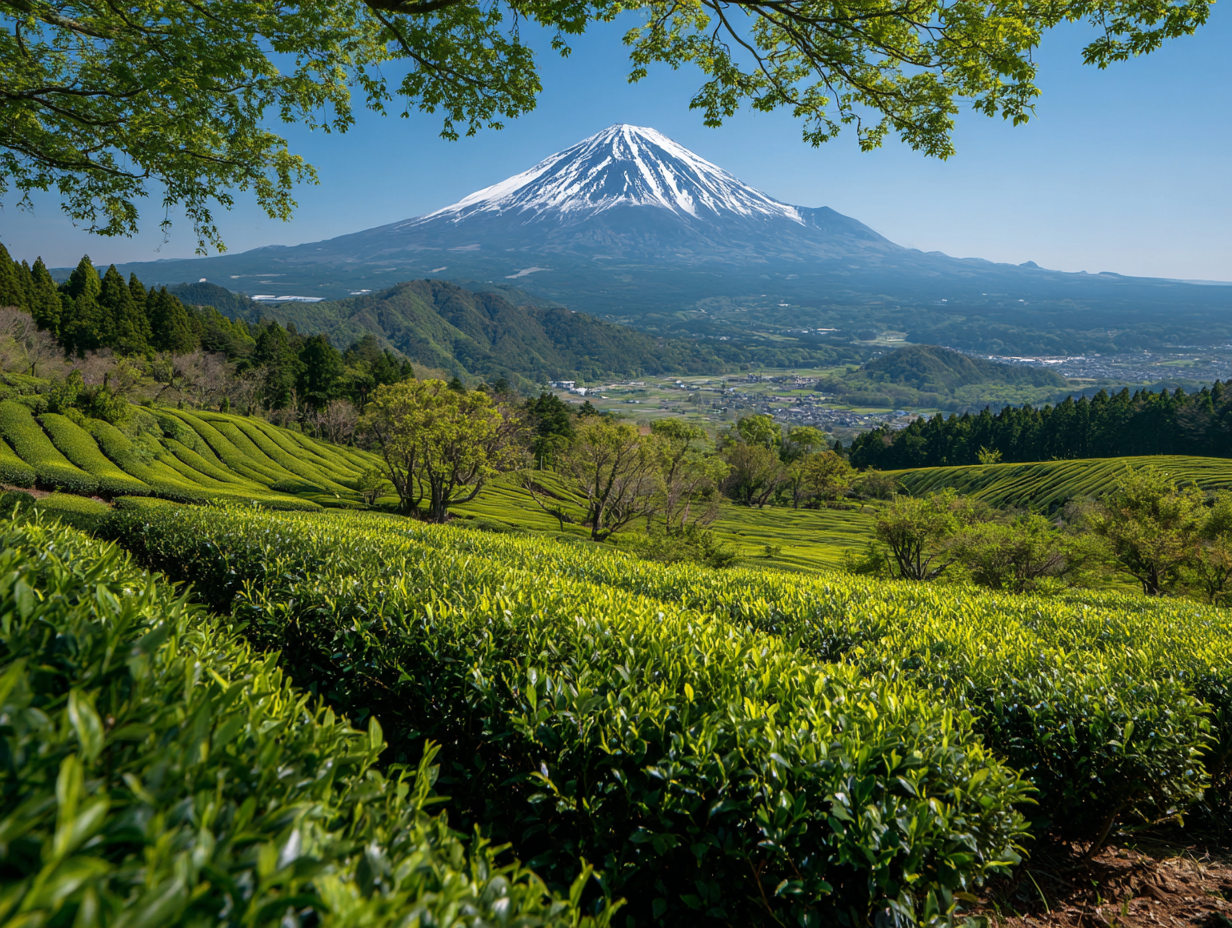
The tea gardens of Shizuoka Prefecture, with Mount Fuji presiding over the horizon — an environment of rare natural perfection for growing ceremonial-grade matcha.
How Matcha Came to Japan
It was a Japanese Zen Buddhist monk named Eisai who carried tea seeds and the knowledge of powdered tea preparation from China to Japan around 1191 AD. Eisai planted seeds in Uji, south of Kyoto, and wrote the first Japanese treatise on tea — Kissa Yōjōki ("Drinking Tea for Health") — in which he declared tea "the most wonderful medicine for nourishing one's health."
Over the following centuries, Japanese culture transformed what had been a Chinese monastic practice into something entirely its own. Tea drinking evolved into the highly codified art of chado (茶道) — the Way of Tea — a practice that remains central to Japanese culture to this day. And it is within this centuries-long tradition that matcha, as we know it today, was born and perfected.
-
Tang Dynasty China · 618–907 ADThe First Powdered TeaChinese Buddhist monks begin compressing and grinding tea leaves into cakes, then grinding portions into powder for drinking during meditation — the earliest ancestor of matcha.
-
Song Dynasty China · 960–1279 ADWhisked Powdered Tea RefinedThe method of whisking powdered tea into frothy hot water is perfected in Song Dynasty China and becomes central to Chan (Zen) Buddhist practice in monasteries.
-
1191 ADEisai Brings Tea to JapanZen monk Eisai returns from China carrying tea seeds and the knowledge of powdered tea preparation. He plants the first seeds in Uji, near Kyoto, and introduces the practice to Japanese Buddhist monasteries.
-
15th–16th CenturyThe Birth of the Japanese Tea CeremonyTea master Sen no Rikyū codifies chado (the Way of Tea) — establishing the philosophical, aesthetic, and practical foundations of the Japanese tea ceremony that endure to this day. Matcha becomes its central element.
-
Edo Period · 1603–1868Shade-Growing Technique DevelopedTea farmers in Uji develop the practice of covering tea plants with shade screens before harvest — the technique that gives ceremonial matcha its defining deep green colour, umami depth, and natural sweetness.
-
Present DayJapan Remains the World's Home of MatchaJapan — and specifically its celebrated tea regions of Uji, Nishio, and Shizuoka — remains the undisputed global home of ceremonial-grade matcha, combining ancient traditions with modern precision processing.
Japan's Great Matcha Regions
Not all matcha is created equal, and not all Japanese tea is matcha. Japan's matcha production is concentrated in three principal regions, each with its own terroir, tradition, and style.
The historic heartland of Japanese matcha. Uji's cool mountain air, high humidity, and deep cultural heritage make it synonymous with ceremonial-grade matcha. The birthplace of the Japanese tea ceremony tradition.
Japan's largest volume producer of matcha. Nishio's flat, fertile plains and abundant sunshine produce consistent, high-quality matcha used widely in food, confectionery, and everyday ceremonial preparation.
Japan's most biodiverse tea-growing region, producing roughly 40% of the nation's total tea output. The varied terrain — from coastal lowlands to high mountain valleys — creates exceptional range and complexity in its teas.
Of these three, Shizuoka is distinguished by its sheer variety of growing environments. Its mountain valleys, river mists, and dramatic shifts in altitude create a tapestry of microclimates — each imparting its own character to the leaves grown within it. It is here, in the highlands of Shizuoka, that FUJI ASAHIEN has been crafting exceptional tea for more than 80 years.
Shizuoka: Japan's Tea Capital

Morning mist drifts through the tea fields of Shizuoka — the natural humidity that gives the region its characteristic softness and depth of flavour.
Shizuoka Prefecture, situated on Japan's central Pacific coast between Tokyo and Nagoya, is the nation's most prolific tea-growing region by output — responsible for roughly 40% of Japan's total green tea production. But beyond volume, Shizuoka is celebrated for the remarkable variety and quality of its teas.
Why Shizuoka Produces Exceptional Tea
The prefecture's geography is its greatest asset. Shizuoka's terrain rises from sea level on its southern coastline to mountain peaks exceeding 3,000 metres in its northern interior — a dramatic vertical range that encompasses dozens of distinct growing environments within a single prefecture. This diversity of altitude, soil, and microclimate allows Shizuoka to produce teas of extraordinary variety, from delicate lowland senchas to the deep, mineral-rich teas of its high-altitude river valleys.
Crucially, Shizuoka benefits from the influence of Mount Fuji — Japan's iconic 3,776-metre volcano. The mountain's snowmelt feeds the rivers and groundwater that nourish Shizuoka's tea gardens, delivering a natural supply of mineral-rich, soft water throughout the growing season. It is this water, filtering slowly through volcanic rock, that gives Shizuoka teas their particular mineral purity and clean, distinctive character.
The Kawane Tea Region
Within Shizuoka's remarkable tapestry of growing environments, one region stands apart for the exceptional quality and character of its tea: Kawane (川根), located in the deep mountain valley of the Oi River (Ōigawa) in central Shizuoka.
A Valley Unlike Any Other
Kawane's tea gardens rise steeply along the slopes of the Oi River valley, at elevations ranging from a few hundred metres to over 1,000 metres above sea level. The valley's deep gorges channel morning mists upward each day — a natural daily fogging that keeps the tea plants hydrated, modulates temperature, and most importantly, mimics the effect of artificial shade covering, suppressing photosynthesis and stimulating the production of chlorophyll and L-theanine.
In effect, Kawane's geography does naturally what farmers elsewhere must engineer artificially — creating the conditions that produce deep green colour, rich umami flavour, and the characteristic sweetness of premium matcha.

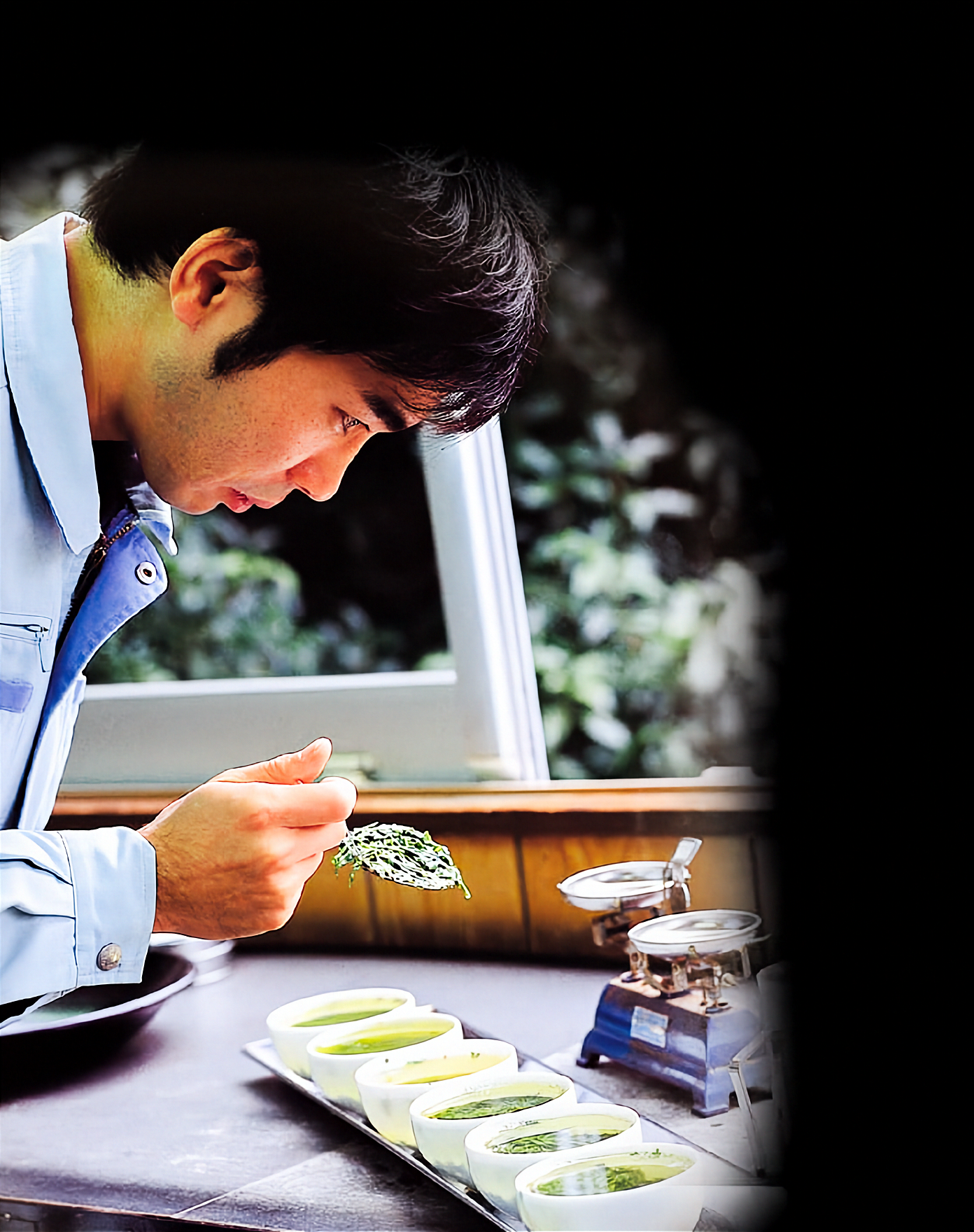
A FUJI ASAHIEN tea specialist inspects first-flush Kawane leaves by hand — selecting only the finest tencha for milling into ceremonial-grade matcha.
The Oigawa Railway: A Symbol of Kawane's Isolation
The depth of Kawane's mountain location is perhaps best illustrated by the railway that serves it: the Oigawa Railway, a historic narrow-gauge line that winds its way along the floor of the Oi River gorge, through terrain so rugged that no conventional road could navigate it. The line runs through tunnels carved through solid rock and along cliff faces above the river, passing through some of the most dramatically beautiful and remote tea-growing country in all of Japan. FUJI ASAHIEN's Ekimae Honten branch store stands at Ieyama Station on this very line — a testament to our deep, historic connection with the Kawane valley.
FUJI ASAHIEN: Rooted in Kawane
FUJI ASAHIEN is not simply a company that sources tea from Kawane — we are part of the fabric of this region. Our roots in Kawane-cho, Shizuoka stretch back more than 80 years, across multiple generations of tea craftsmanship. We are, at our core, a Kawane tea company.
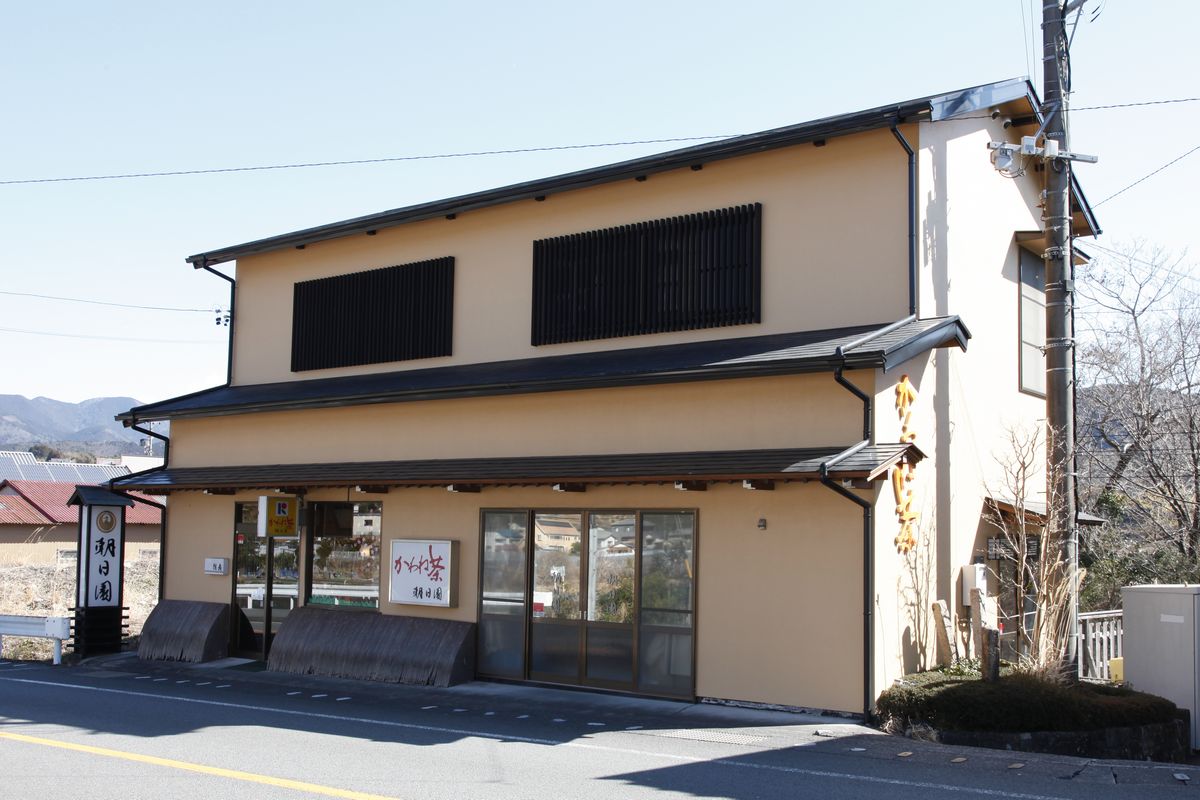
Our original flagship store in Kawane-cho, where FUJI ASAHIEN was founded. The heart of our operations and the home of our master blending tradition, rooted in the Oi River valley for over 80 years.
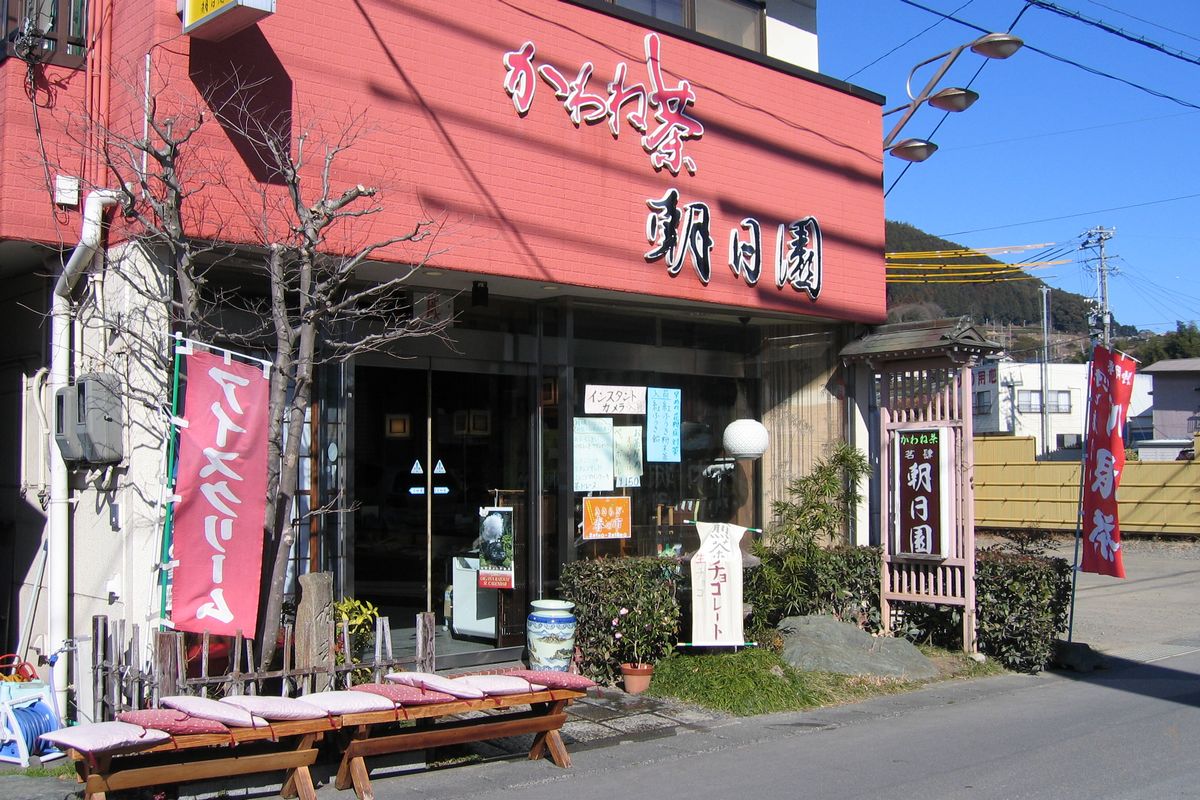
Located at historic Ieyama Station on the Oigawa Railway — the storied mountain line that winds through the heart of Kawane's tea country. A living landmark of the region's deep tea heritage.
The Art of the Master Blender
At FUJI ASAHIEN, our matcha is not simply the product of a single field or a single season's harvest. It is the result of the careful, expert art of master blending — the practice of combining teas from multiple Kawane gardens, selected and proportioned each season to achieve a consistent, signature flavour profile regardless of annual variation in weather or harvest conditions.
Our master blenders have spent decades learning to read the tea — to assess colour, aroma, and flavour through all their senses, and to compose each batch with the precision of a trained craftsman. This skill, passed down across generations, is what ensures that every bag of FUJI ASAHIEN matcha delivers the same exceptional quality, season after season.
"Japan's finest quality, made accessible."
FUJI ASAHIEN — Kawane-cho, Shizuoka · Est. 80+ yearsFrom Kawane to Your Cup
The journey from a Kawane tea garden to your matcha bowl is long, careful, and deliberate — touching the hands and expertise of farmers, specialists, blenders, and technicians at every stage.
Shade-grown in the mist-fed mountain gardens of the Oi River valley, Shizuoka Prefecture. First-flush leaves harvested in spring at peak amino acid content.
Only the youngest, most tender first-flush leaves are selected. Our specialists inspect each harvest by hand, evaluating colour, texture, and aroma before any leaf proceeds to processing.
Tencha leaves are milled to 5 microns using advanced bead-mill technology in our FSSC 22000-certified, fully sealed clean-room — eliminating any risk of stone-derived impurities.
Sealed in high-performance aluminium pouches and shipped worldwide via DHL Express — ensuring maximum freshness from Kawane to your door, wherever you are in the world.
Taste the Kawane Difference
Every bag of FUJI ASAHIEN matcha carries the character of the Oi River valley — the mists, the mineral soils, the mountain air, and 80 years of craft. Experience the origin in every sip.
Shop Our Matcha Collection →