
Matcha Guide
Why is matcha so expensive?
Matcha is expensive because every step of its production is unusually labour-intensive, time-consuming, and yield-limited — from weeks of shade cultivation before harvest, to hand-selection of only the youngest first-flush leaves, to painstaking destemming and slow precision milling. A single 30g bag of ceremonial-grade matcha represents months of skilled agricultural work, a narrow seasonal window, and an uncompromising chain of quality control that simply cannot be shortcut.
The True Cost of Exceptional Matcha
Walk into any café and you will notice that matcha commands a premium over almost every other tea. Buy a bag of ceremonial-grade matcha online and the price per gram can seem extraordinary compared to ordinary loose-leaf green tea. This is not an accident of marketing, nor a function of fashion. It is the direct consequence of how genuine matcha is grown, harvested, and processed.
To understand why matcha costs what it does, you need to follow the leaf — from the shaded hillsides of Shizuoka to the sealed clean-room where it is finally milled into powder. At every stage, the answer to "why is it so expensive?" is the same: because there is no faster, cheaper, or easier way to do it without compromising what makes it matcha.
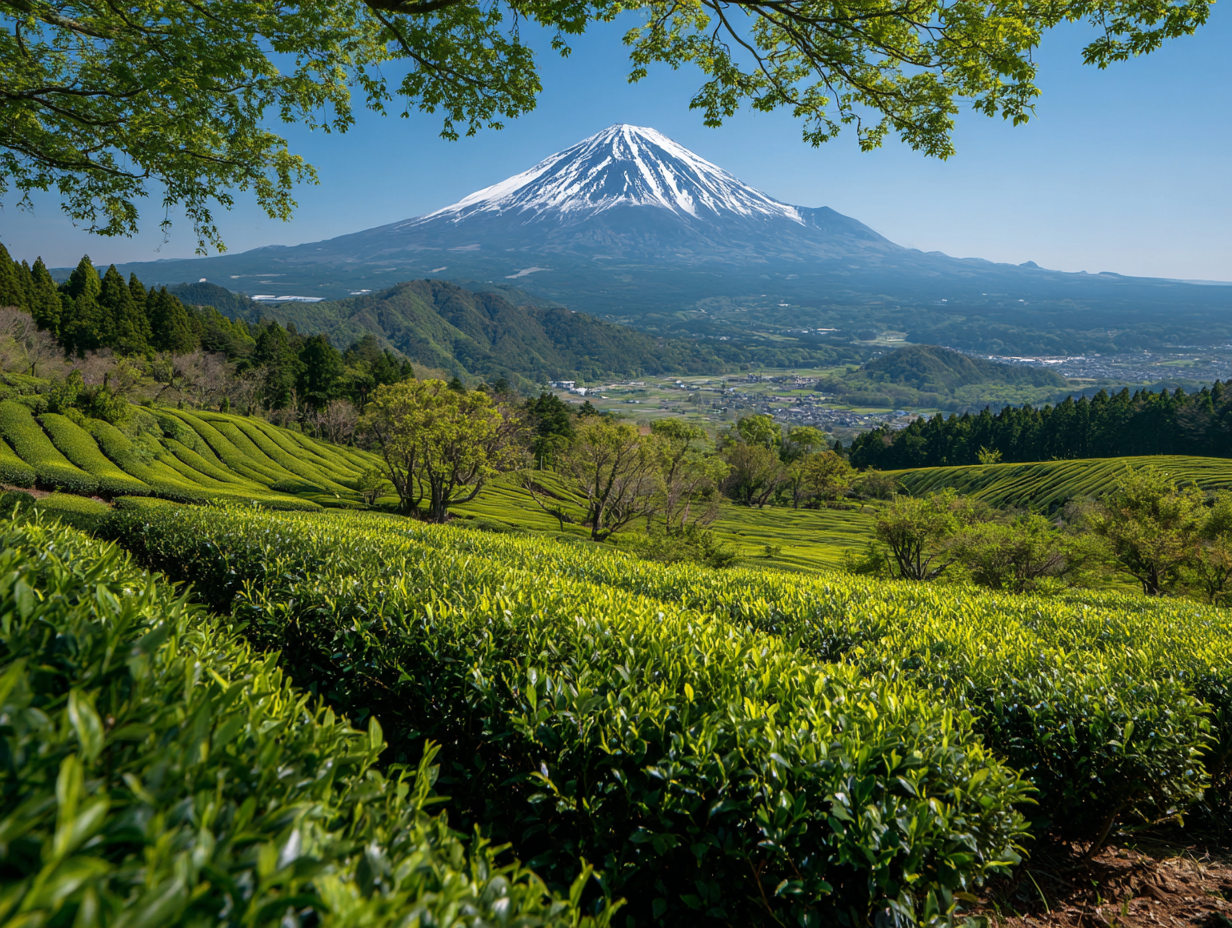
The mountain tea gardens of Shizuoka Prefecture — among the most carefully managed, labour-intensive agricultural landscapes in Japan.
Seven Reasons Matcha Commands a Premium
-
1Shade Cultivation: Weeks of Labour Before a Single Leaf is Picked
Standard green tea is grown in full sunlight with relatively little intervention beyond irrigation and pest management. Matcha begins with a radically different commitment: three to four weeks before harvest, every tea bush destined for matcha production must be covered — entirely — to block approximately 90% of direct sunlight.
This process, traditionally done with straw thatching (kabuse) and today often with specially woven black screens, must be installed by hand across entire hillside plantations. The physical labour involved is considerable. In mountain terroirs like Kawane, Shizuoka, where steep slopes and remote locations make every task harder, this work is particularly demanding.
Without shading, the plant cannot produce the surge of chlorophyll and L-theanine that gives ceremonial matcha its colour, umami sweetness, and calm-energy effect. There is no shortcut. The cost of that shading is built into every gram.

The mist-wrapped mountain gardens of Shizuoka — where shade cultivation and natural valley fogging combine to produce leaves of extraordinary quality.
-
2Only First-Flush Leaves: A Tiny Fraction of the Crop
A single tea plant produces multiple flushes of new growth throughout the spring and summer. For ceremonial-grade matcha, only the very first flush of the year — the youngest, most tender leaves of the spring harvest (ichibancha) — qualifies. These leaves contain the highest concentration of amino acids, the most delicate flavour compounds, and the most vivid colour.
The window for harvesting these leaves is extremely narrow — typically just a few weeks in spring, varying by altitude and region. Once the first flush is past, the leaf chemistry changes rapidly. Later flushes produce leaves with higher catechin content (more bitterness and astringency) and lower L-theanine content — acceptable for culinary-grade matcha, but not for ceremonial-grade production.
A ceremonial-grade matcha producer has one meaningful harvest opportunity per year. That compressed seasonal window means a constrained annual yield, and a constrained yield supports higher prices.

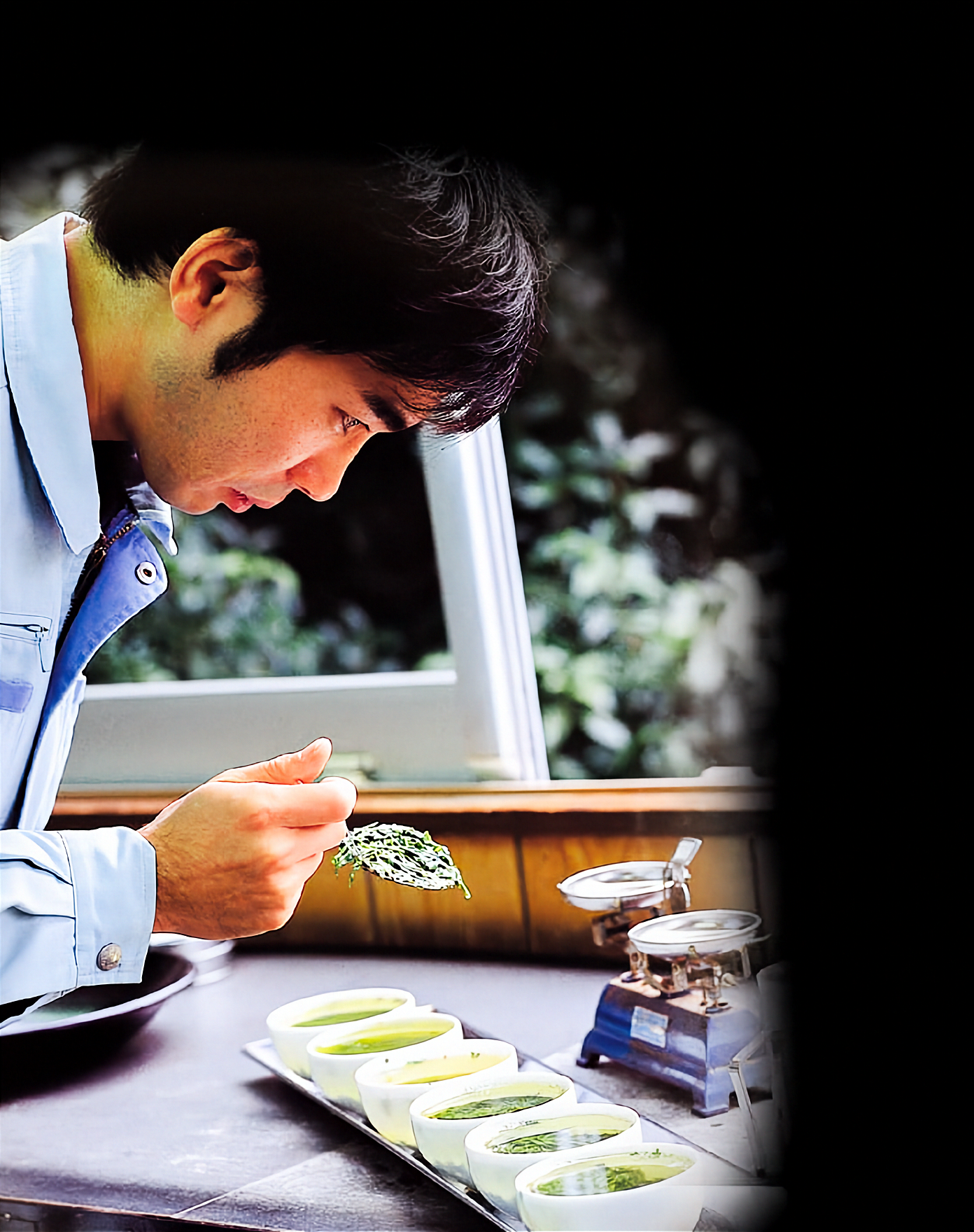
FUJI ASAHIEN's tea specialists assess every first-flush harvest by hand — colour, aroma, and texture evaluated before any leaf is accepted for processing.
-
3Hand Selection and Rigorous Quality Inspection
Even within the first flush, not every leaf is equal. Ceremonial-grade matcha requires only the youngest, smallest leaves — typically the top two or three leaves of each new shoot. Larger, older leaves even from the same flush produce a coarser, less refined powder.
Before processing begins, experienced tea specialists inspect each harvest, assessing colour, texture, aroma, and moisture content. Leaves that do not meet the required standard are redirected to lower-grade production. This sorting and selection step is laborious, requires trained sensory judgement, and inevitably reduces the proportion of the crop that qualifies as ceremonial grade.
At FUJI ASAHIEN, this quality gate is non-negotiable. The leaves that enter our precision milling process have already passed through multiple rounds of expert evaluation. The cost of that expertise — and of the rejected leaves — is part of what you pay for in a bag of premium matcha.
A FUJI ASAHIEN tea master examines leaves selected for Den-sho Superior Grade — representing 80+ years of blending expertise and uncompromising standards.
-
4The Tencha Process: Destemming, Deveining, and Drying
Before matcha can be milled, the harvested leaves must be converted into tencha — the refined intermediate product that is matcha's direct raw material. This process involves steaming the fresh leaves immediately after harvest to halt oxidation and lock in their vivid green colour. The leaves are then air-dried (not rolled, as in sencha production) to preserve their flat, open structure.
The critical — and costly — step comes next: every stem and vein must be removed from the dried leaves, leaving only the pure leaf flesh. Stems and veins are harder, more fibrous, and produce a lower-quality, grittier powder. Their removal is painstaking work that significantly reduces the weight of usable material from the original harvest.
The resulting tencha — pure, vein-free, stem-free leaf — represents a small fraction of the original harvested mass. That reduction in yield is directly reflected in the price of the finished matcha.
-
5Ultra-Fine Milling: An Extraordinarily Slow Process
The most immediately understandable reason for matcha's price is the milling process. Unlike coffee, spices, or ordinary powdered teas — which can be ground rapidly by high-speed industrial mills — matcha must be milled with extreme care to achieve the particle size, colour, and flavour quality that defines it.
Traditional stone mills, still used by some producers, grind so slowly that a single mill produces only around 30–40 grams of matcha per hour. A single 30g bag of matcha represents roughly a full hour of stone-mill operation. Even with modern precision milling technology, the care required to achieve the correct particle size without generating heat (which degrades delicate aroma compounds) means that milling remains a time-limited, carefully controlled process.
At FUJI ASAHIEN, we use advanced bead-mill technology that achieves a particle size of just 5 microns — finer than most ceremonial stone-milled matcha — while eliminating the risk of stone-derived impurities. This precision comes at a cost in equipment investment and process control that is reflected in the final product.
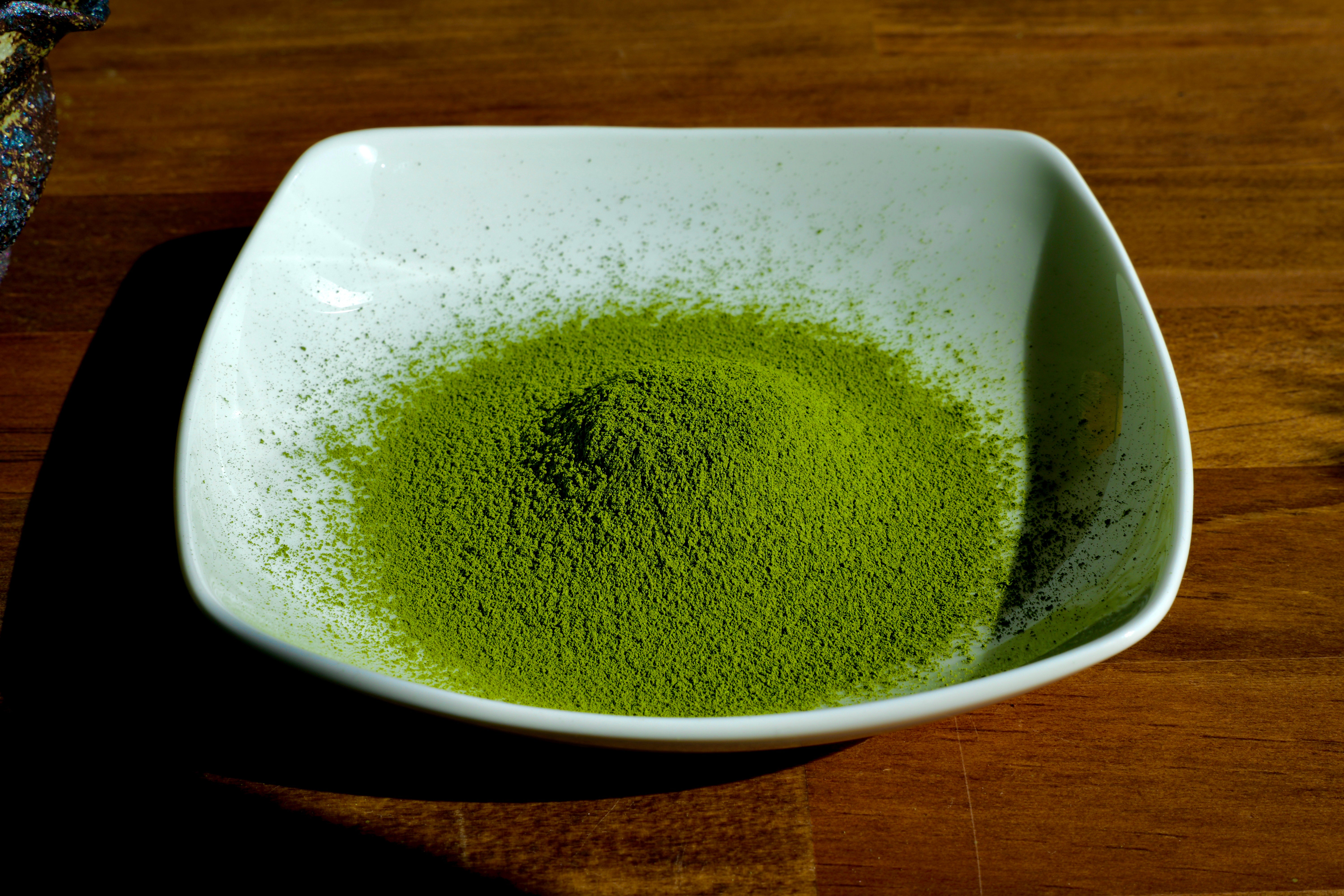
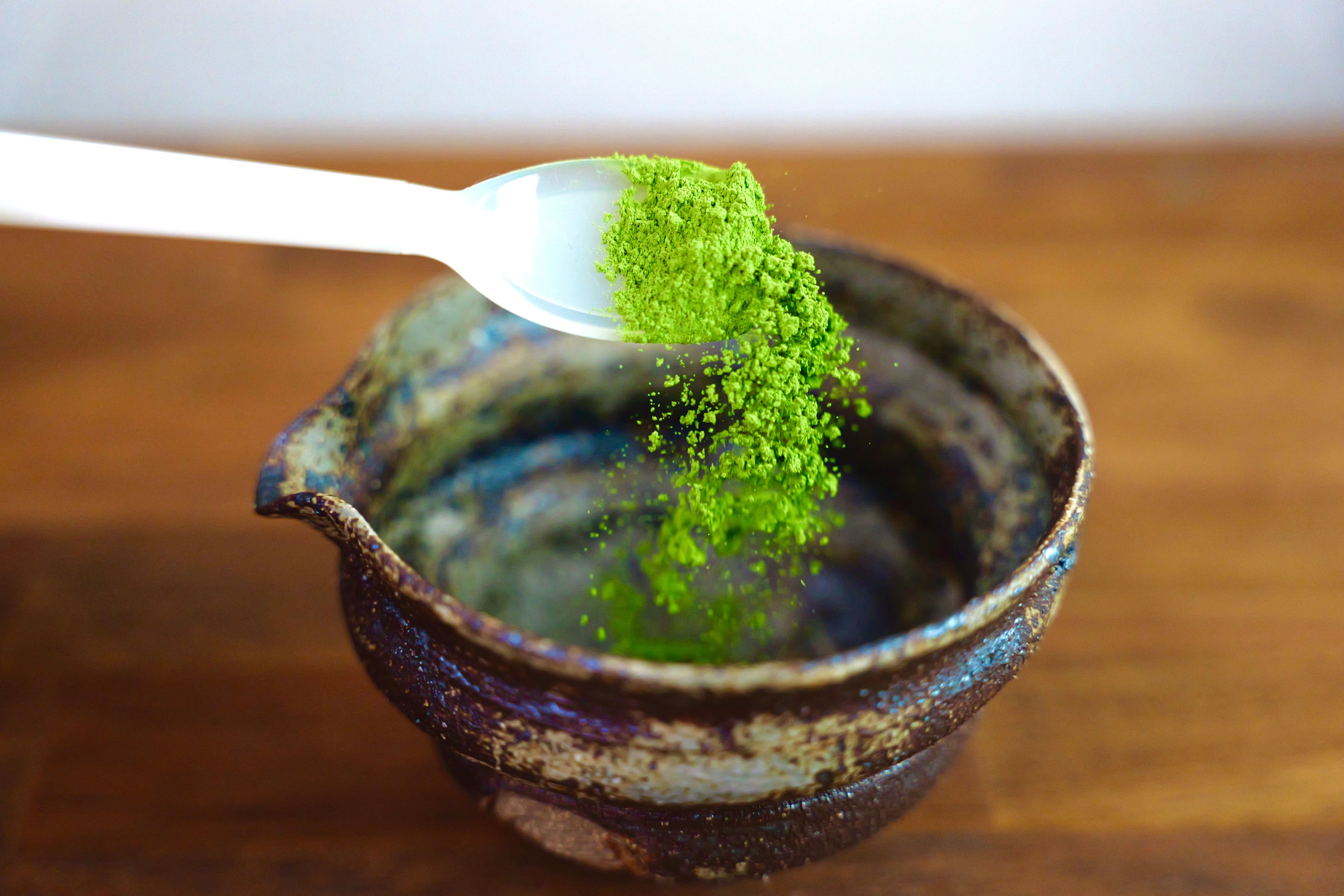
5-micron precision-milled matcha — a particle size achievable only through careful, controlled milling that cannot be rushed without sacrificing quality.
-
6Certified Clean-Room Production and International Quality Standards
Matcha powder is exceptionally susceptible to contamination. Its ultra-fine particles attract airborne dust, bacteria, and oxidation agents far more readily than whole-leaf teas. Producing matcha to genuine food-safety standards requires not just clean equipment but a controlled environment — a sealed facility with filtered air, temperature control, and rigorous hygiene protocols at every step.
At FUJI ASAHIEN, our entire milling process takes place in a fully enclosed clean-room certified by the Japan Food Hygiene Association and holding FSSC 22000 certification — one of the most rigorous international food safety management standards in existence. Establishing and maintaining this environment requires significant capital investment and ongoing operational cost.
For consumers buying matcha internationally, this certification is not a marketing detail — it is a meaningful guarantee of purity, hygiene, and consistency that distinguishes genuinely safe, premium matcha from cheaper alternatives produced without equivalent controls.
-
7The Art of Master Blending and Seasonal Consistency
Premium matcha is not simply milled tencha from a single garden. It is the result of expert blending — the careful combination of teas from multiple gardens and, sometimes, multiple harvests, to achieve a consistent, signature flavour profile season after season despite natural variation in weather, soil conditions, and harvest quality.
This blending is an art that takes decades to master. At FUJI ASAHIEN, our master blenders have spent their careers developing the sensory acuity to assess, select, and proportion teas with the precision of a trained craftsman. Their expertise ensures that every bag of FUJI ASAHIEN matcha delivers the same experience — a promise that requires both rare skill and significant time investment.
FUJI ASAHIEN's master blender at work — the human expertise that guarantees consistent quality across every season's harvest.
Why Cheap Matcha Exists — and What It Costs You
It is worth addressing the obvious question: if genuine ceremonial-grade matcha is expensive, why is cheap matcha available? The answer is that not all matcha is made the same way — and the differences are substantial.
This does not mean culinary-grade matcha has no place. For baking, cooking, and blended drinks where matcha's character is one ingredient among many, culinary-grade matcha is perfectly appropriate. But for drinking straight — as a bowl of usucha or a clean matcha latte — the differences between grades are immediate and unmistakable.
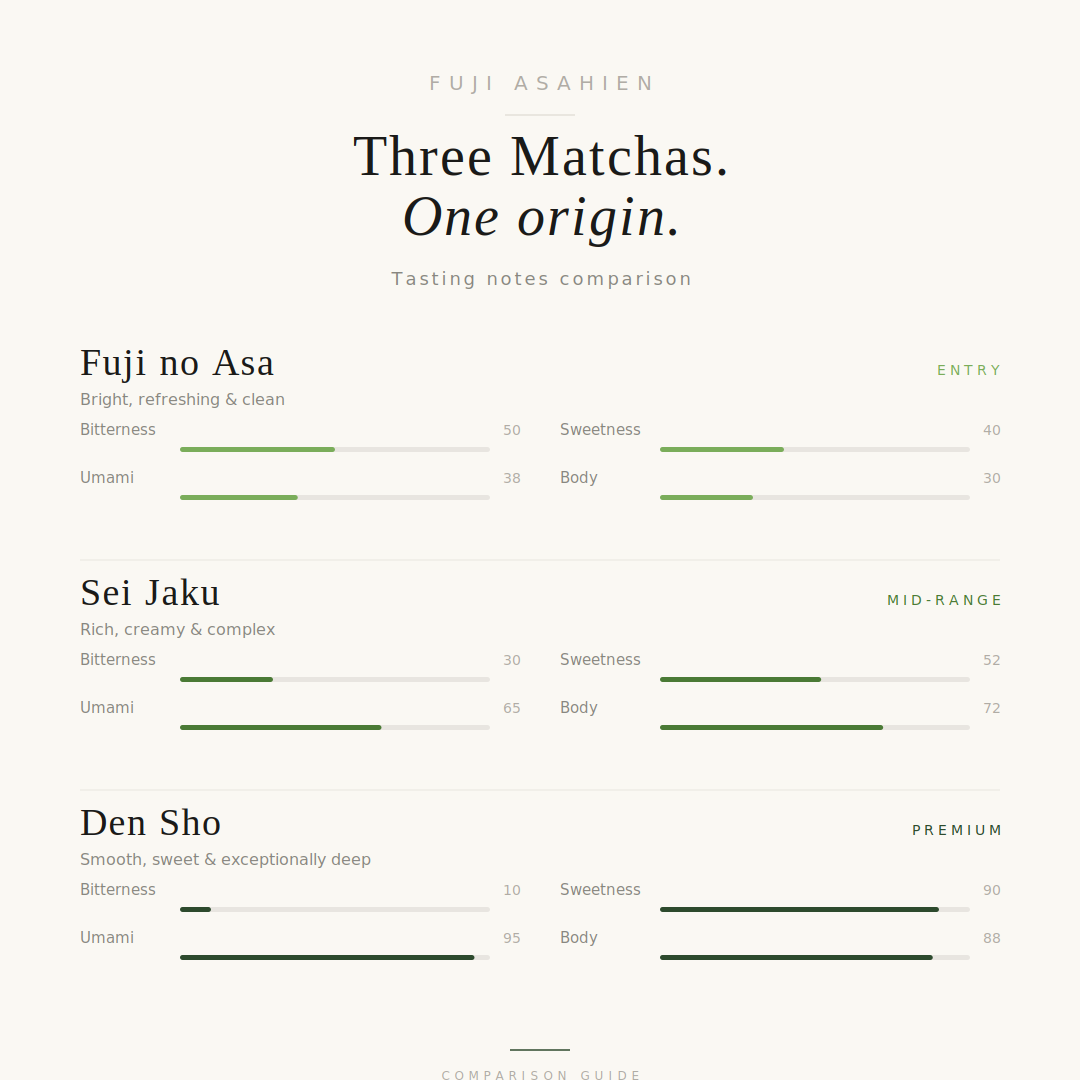
FUJI ASAHIEN's three grades — Standard, Premium, and Superior — each representing a distinct level of first-flush leaf selection, blending complexity, and flavour depth.
Understanding Value, Not Just Price
When you hold a bag of premium ceremonial matcha, you are holding the concentrated result of months of agricultural labour, rare expertise, and uncompromising quality standards. The price reflects not excess profit, but the genuine cost of doing things properly.
Because you consume the entire leaf as powder, matcha delivers the full nutritional value of the tea plant — catechins, L-theanine, chlorophyll, vitamins — not just the water-soluble fraction of a steeped tea.
The elevated L-theanine from shade cultivation works synergistically with caffeine to produce smooth, focused alertness lasting several hours — a qualitatively different energy experience than coffee or standard tea.
First-flush ceremonial matcha delivers a depth of umami sweetness and layered complexity that culinary grades simply cannot replicate. One cup of premium matcha often satisfies in a way that multiple cups of cheaper alternatives do not.
Certified clean-room production and FSSC 22000 standards mean that premium matcha from reputable producers like FUJI ASAHIEN is genuinely free from contaminants — a standard that cheaper alternatives cannot always match.
"The price of genuine matcha is not the cost of a luxury — it is the fair reflection of the extraordinary labour, skill, and care required to produce something truly exceptional."
At FUJI ASAHIEN, we have spent more than 80 years perfecting this balance — delivering the highest quality matcha from the Kawane valley of Shizuoka at a price that reflects genuine value rather than inflated margin. Our three grades — Fuji-no-Asa (Standard), Sei-Jaku (Premium), and Den-sho (Superior) — represent three distinct points on the quality spectrum, each produced with the same uncompromising commitment to purity and craftsmanship.
Quality You Can Taste
Every bag of FUJI ASAHIEN matcha represents months of careful cultivation, expert blending, and precision milling — all from the shade-grown tea gardens of Kawane, Shizuoka. Experience the difference that genuine quality makes.
Explore Our Matcha Collection →